Tic-Tac-Toe Killer
Lady in the LakeThe Tic-Tac-Toe Killer is the newspaper nickname for an unidentified serial killer who terrorized Baltimore's drunks in the mid-1960s, preying on the barflies along the waterfront. The name appears throughout the novel as a recurring point of reference, most often in the conversations and thoughts of Maddie Schwartz as she pursues her own investigation into the death of Cleo Sherwood. The killer's nickname carries a double weight in the story: it is both a genuine piece of Baltimore crime lore and a sharp narrative device that exposes the unequal value the press and the public assign to different kinds of victims. The Tic-Tac-Toe Killer's victims were granted a name, a personified menace, and a linked series of deaths; Cleo Sherwood, by contrast, was reduced to a single dismissive label, the Lady in the Lake, and her death was treated as an accident or a disappearance rather than a homicide. The contrast between these two namings runs through the novel as a quiet indictment of how the media decides whose suffering matters.
The Nickname and Its Origins
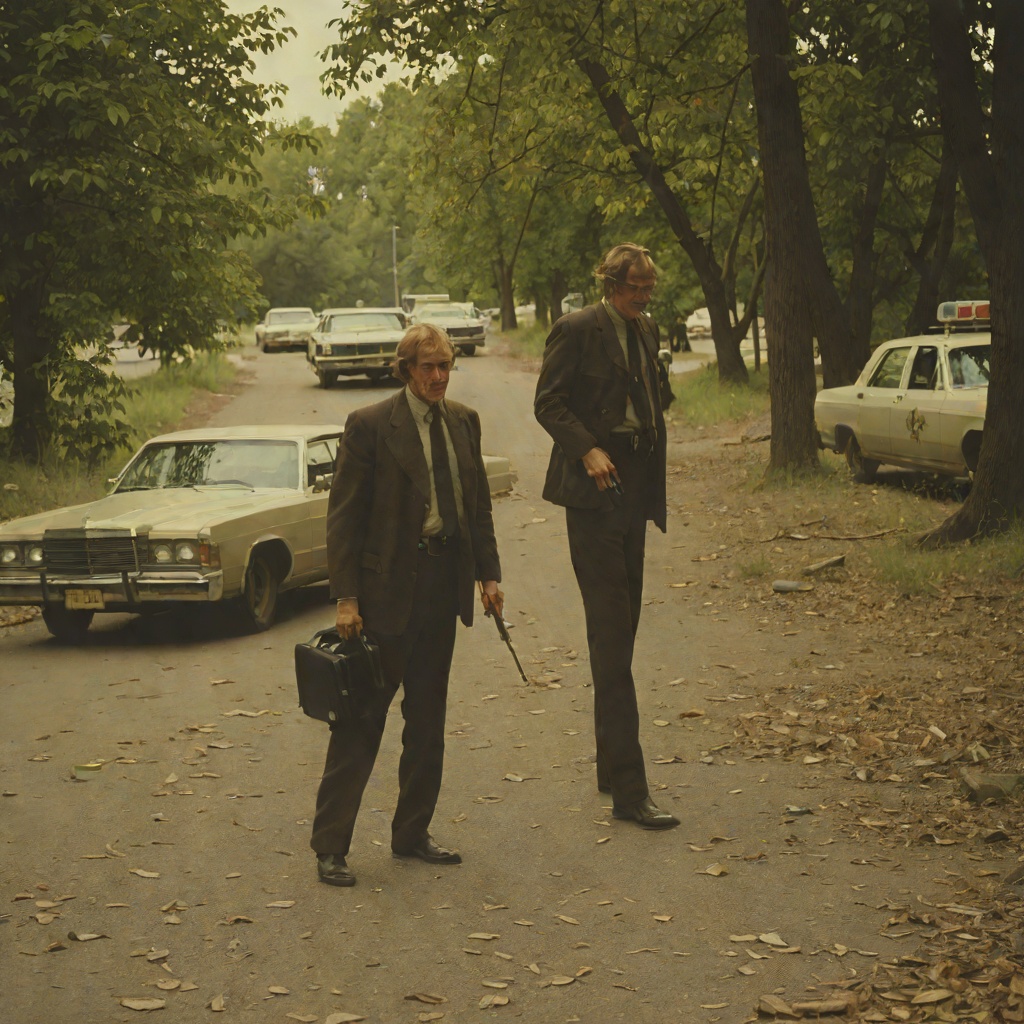
The Tic-Tac-Toe Killer is first invoked in the novel during a conversation between Maddie Schwartz and John Diller, a reporter at The Baltimore Star, as she seeks to understand how the newspaper covers crime. Diller mentions the killer while walking with Maddie to the morgue, describing how the unknown murderer preyed on the barflies along the waterfront and pointing out an alley where one victim had been found. He cheerfully detailed the wounds that the newspaper had hidden behind the nickname, allowing readers to infer exactly what had happened to the bodies. The nickname itself, with its playful, game-like quality, stands in jarring contrast to the grim reality of the killings it describes. Diller's casual tone as he shares these details with Maddie, noting that he would not normally tell such stories to a lady but that she is a reporter, underscores the gendered and professional boundaries that Maddie is crossing. The nickname thus enters the story already freighted with the newspaper's peculiar logic: a serial killer is given a memorable, almost whimsical name, while the individual victims are subsumed into a single category of nameless, sad, sick men.
The Contrast with the Lady in the Lake
The Tic-Tac-Toe Killer's named, personified treatment becomes the explicit standard against which Maddie measures the neglect of Cleo Sherwood's case. When the medical examiner refers to Cleo as the Lady in the Lake, Maddie makes a mental note, liking the nickname and hoping that using the term might humanize Cleo's story the way the Tic-Tac-Toe Killer nickname granted some dignity to his victims. This moment is pivotal: Maddie consciously borrows the logic of the killer's naming to advocate for Cleo, but the comparison also reveals the asymmetry. The Tic-Tac-Toe Killer's victims, though poor and marginalized, were at least acknowledged as murder victims whose deaths were linked and investigated. Cleo, by contrast, was found dead in the fountain in January, and the question of how a body gets into a fountain in winter was never seriously pursued. Maddie asks Diller directly how Cleo's death could be anything but a homicide, and he concedes that these are good questions but offers no answers. The Tic-Tac-Toe Killer thus functions as a mirror that exposes the failure of the system to extend the same concern to Cleo.
The Killer as a Measure of Maddie's Ambition
The Tic-Tac-Toe Killer also appears in the novel as a measure of Maddie Schwartz's ambitions and the resistance she faces as a woman trying to break into journalism. When Maddie asks for a byline and a chance to write the page-one scoop about Cleo's death, the response she receives is a mocking challenge: she is asked whether she plans to insert herself into every big murder, dress up like a wino and go out and find the Tic-Tac-Toe Killer who is terrorizing Baltimore's drunks. The rhetorical question is meant to belittle her, framing her desire to report as a kind of stunt rather than serious journalism. The invocation of the Tic-Tac-Toe Killer in this rebuke is telling: it represents the kind of story that is considered legitimate, masculine, and dangerous, the province of real reporters, not a woman seeking a tryout. Maddie's response, offering to start at the bottom and work her way up without special treatment, shows her willingness to accept the terms of the profession, but the exchange leaves the sting of the comparison intact. The killer's name thus becomes a shorthand for the world of crime reporting from which Maddie is initially excluded.
The Killer's Victims and the Landscape of Neglect
The world the Tic-Tac-Toe Killer inhabits is vividly rendered in the novel as a grimy landscape of neglect. The Inner Harbor is described as a grimy place, with the McCormick spice factory on the western edge filling the air with cinnamon, an odd contrast to the landscape. Maddie, who had seldom ventured as far south as the waterfront, tries to imagine the sad, sick men who were being lured from bars and then left dead in vacant lots and alleys. The image of these men, drawn from their drinking spots and abandoned in empty spaces, evokes a particular kind of urban tragedy, one that the press acknowledges through the killer's nickname even as it fails to protect or properly mourn the victims. The Tic-Tac-Toe Killer's victims are granted more respect than Cleo Sherwood, as Maddie observes, because their killer had been named, personified, and their deaths linked. This observation cuts to the heart of the novel's concern with how stories are told and whose stories are told at all. The killer's nickname, for all its grim playfulness, at least acknowledges that a crime has been committed; Cleo's death, by contrast, is allowed to remain ambiguous, a body in a fountain with no one asking how it got there.
The Nickname's Broader Resonance
Beyond its immediate function in the plot, the Tic-Tac-Toe Killer nickname resonates with the novel's larger themes of naming, identity, and the power of the press. The novel repeatedly returns to the idea that names are destiny, and the way characters are named or nicknamed shapes how they are perceived and treated. The Tic-Tac-Toe Killer, never identified, is nonetheless given a name that makes him a coherent, menacing presence; Cleo Sherwood, fully identified, is given a nickname that reduces her to a picturesque object, the Lady in the Lake. The asymmetry is not accidental but structural, reflecting the novel's critique of a society and a press that value some lives over others. The killer's nickname also serves as a reminder of the limits of the media's power: naming a threat does not stop it, and the Tic-Tac-Toe Killer remains at large, a symbol of the unsolved violence that lurks beneath the surface of the city. For Maddie, the killer's name becomes a benchmark of what proper crime reporting looks like, even as she struggles to apply that standard to a case the world has already dismissed. The Tic-Tac-Toe Killer thus stands as a dark counterpoint to the Lady in the Lake, two nicknames that together reveal the moral economy of the newsroom and the city it claims to serve.